


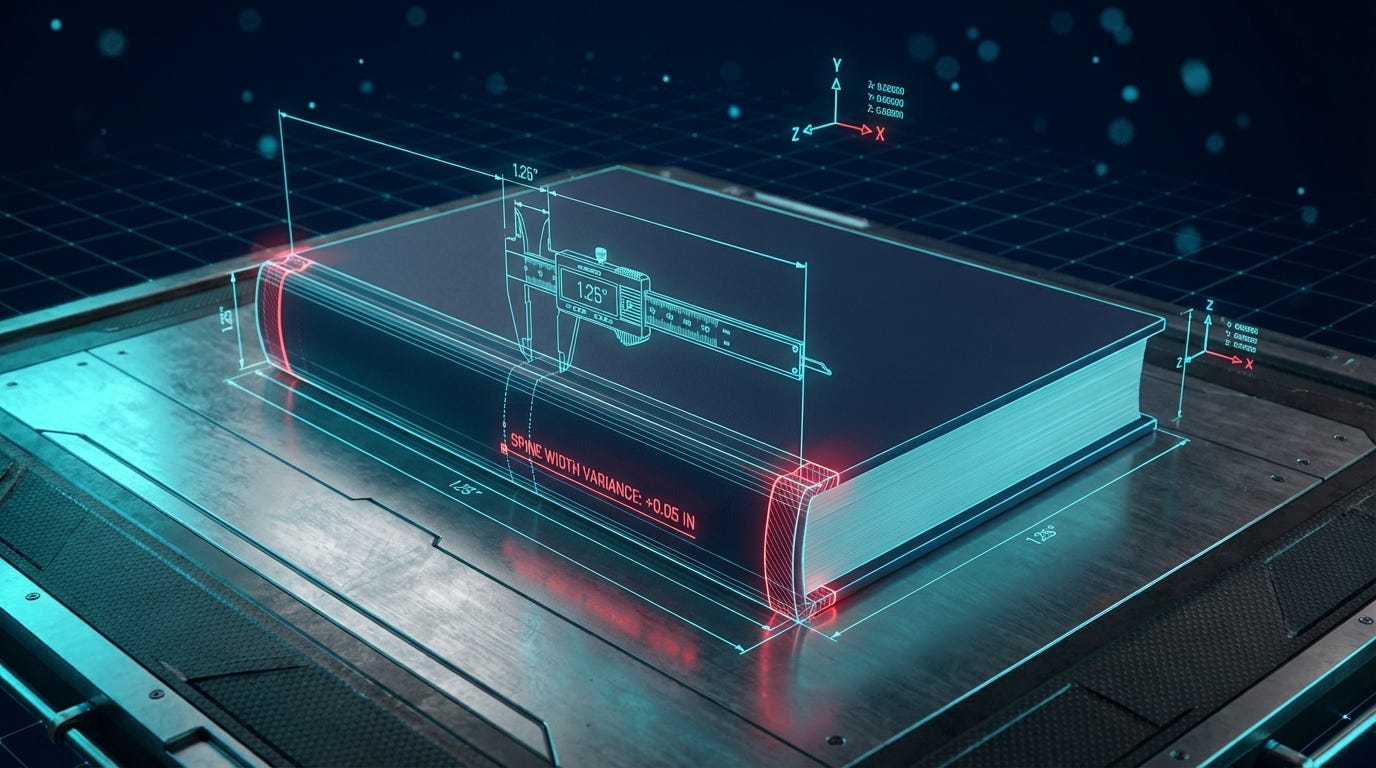
We’ve all been there. You spend weeks perfecting your cover art in Canva. You’ve got the mood, the typography, and the vibe just right. You upload the PDF to IngramSpark, wait twenty-four hours in a state of caffeinated anxiety, only to receive that dreaded red text:
“The spine width of your cover doesn't match our requirements.”
It’s enough to make any indie author want to throw their laptop out a window. But the problem isn’t your art – it’s the physics.
The 0.05-Inch Trap
In the world of Print-On-Demand (POD), a 300-page book isn’t a universal size. Because Amazon KDP and IngramSpark use different paper weights (55lb vs. 50lb) and different milling standards, your book’s spine actually changes size depending on where it’s printed.
As of 2026, the discrepancy is systematic. A 300-page book on KDP White paper has a spine of 0.691”. That same book on IngramSpark White paper is 0.676”.
It’s a tiny difference – barely the thickness of a few credit cards – but it’s enough to make your spine text wrap onto the front cover, making your professional debut look like a “D-tier” amateur project.
Introducing: The Universal Book Architect
I’ve spent the last few weeks obsessed with this “Process Paralysis.” I realized that authors don’t need another generic design tool; they need a Compliance Engine.
I’m currently building the Universal Book Toolset – a tool designed to bridge the gap between your creative vision and the rigid manufacturing rules of KDP and IngramSpark.
Here is what it does:
Precision Geometry: It calculates the exact spine, bleed, and “drift” zones for 2026 platform standards.
The Canva Bridge: It generates a 300 DPI transparent “Blueprint Overlay” that you can drop directly into Canva to ensure your text never drifts into the “Danger Zone.”
Financial Sandbox: It simulates your 2026 net profit, accounting for the new 1.875% IngramSpark Market Access Fee and KDP’s per-page costs.
MS Word Margins: It calculates proper margins (including gutter) for your MS Word file, based on your trim size and page count.
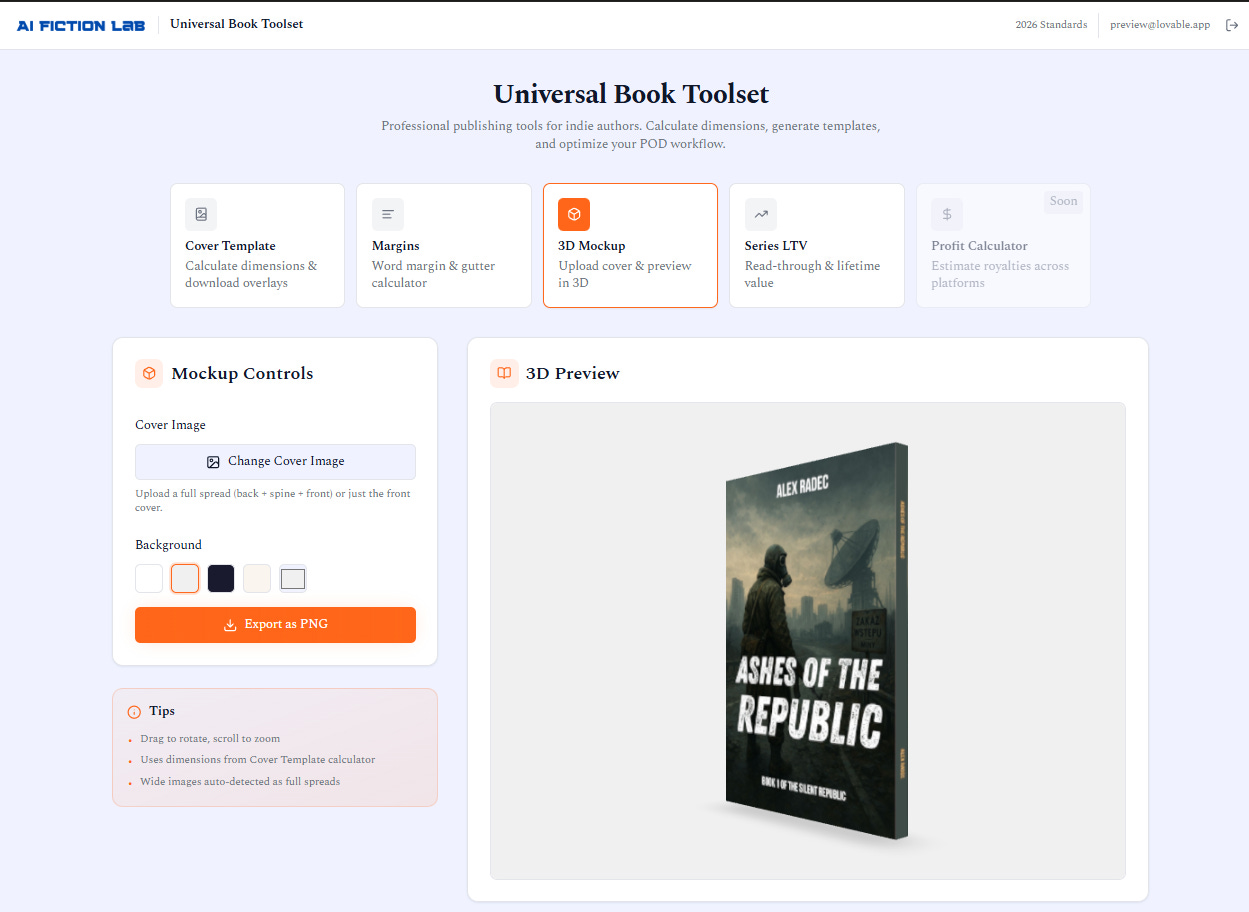
3D Mockup: It creates a 3D mockup of your book, based on trim size, page count and your wraparound image.
Support the Lab
Building this isn’t just about math – it’s about giving indie authors the same technical “moat” that traditional publishers have enjoyed for decades.
The Universal Book Toolset is currently in active development and will be available exclusively to paid subscribers of the AI Fiction Lab.
By upgrading to a paid subscription today, you aren’t just getting a tool – you’re supporting the R&D of a full suite of indie tech (including our upcoming Royalty Cliff detector and Trope-Injected blurb generator).
If you’ve ever felt “process paralysis” while staring at a technical rejection email, this is for you.
I’d love to hear from you – what’s the most frustrating technical rejection you’ve faced in your publishing journey? Let’s solve it in the comments.