


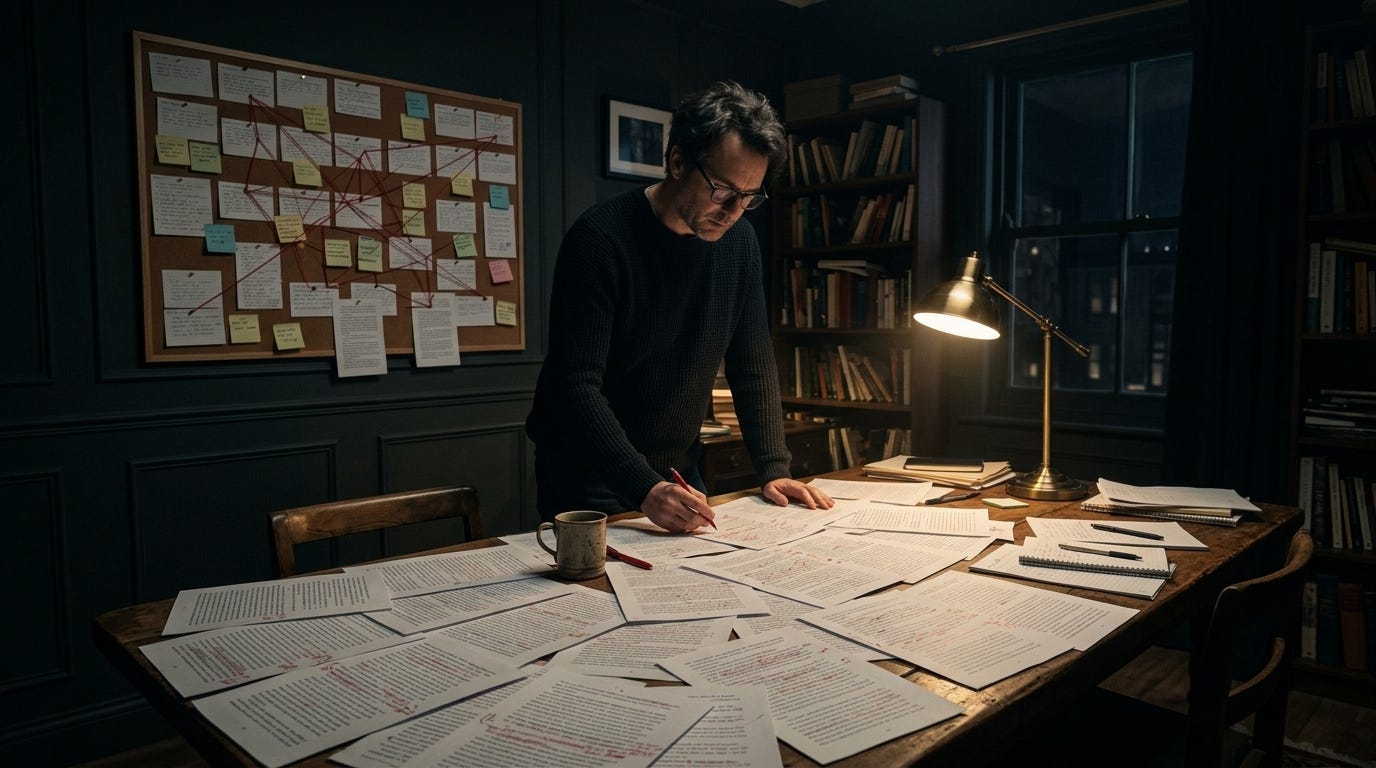
There is a specific kind of vertigo that hits an indie author the moment they type The End.
It’s the realization that you are now entirely responsible for the bridge between your private imagination and a stranger’s bookshelf. In the traditional publishing world, a Max Perkins steps in to catch you. In our world? It’s just us, a pot of cold coffee, and the terrifyingly static cursor of a Word doc.
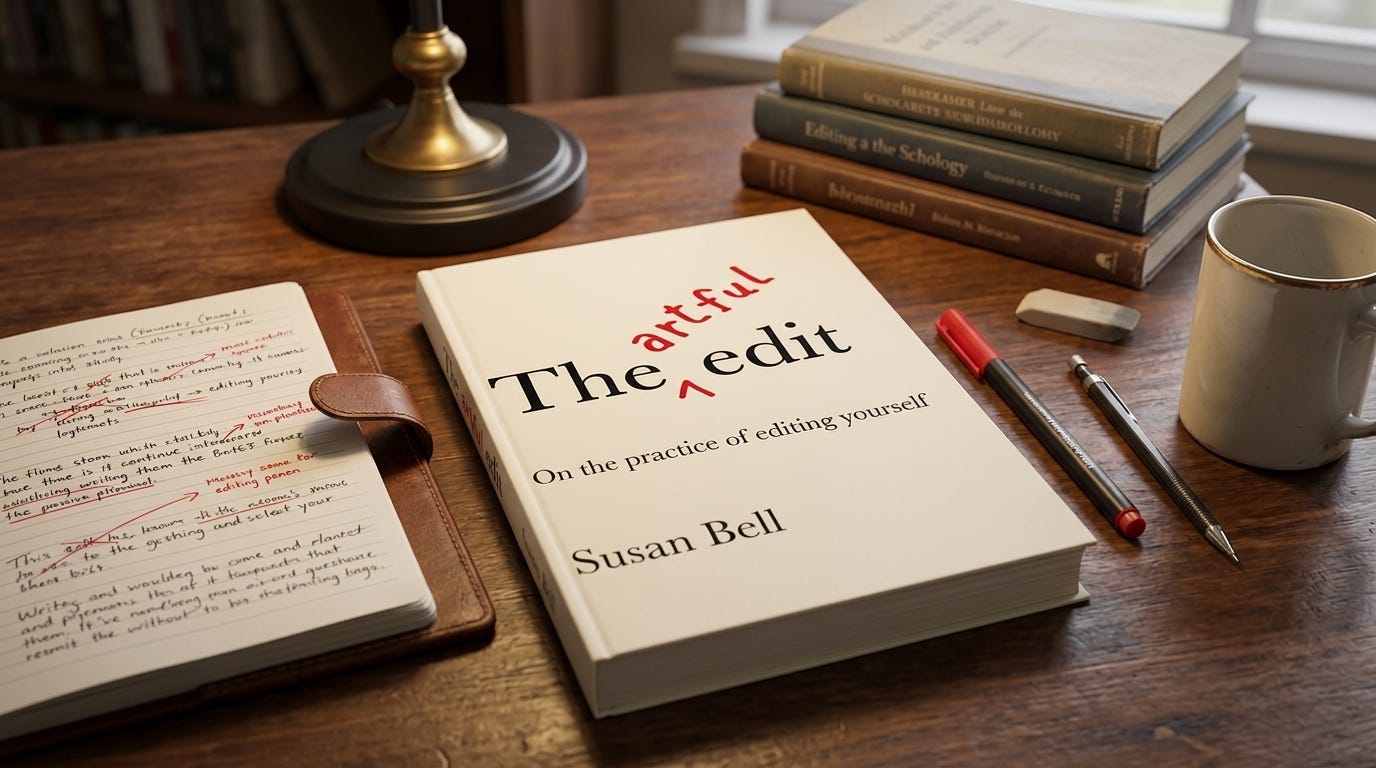
I recently finished Susan Bell’s The Artful Edit, and I’ll be honest: I expected a dry manual on comma placement or the Chicago Manual of Style. What I found instead was a psychological map for the “self-editor” – that split personality we’re forced to adopt once the “writer” is done for the day.
For the self-published author, this book essentially functions as a structural editor in a box. Here is how Bell’s philosophy translates into the indie trenches.
The Problem of Proximity (and How to Fix It)
Bell’s core thesis is something every self-publisher feels in their bones: We are too close to our own work. We read what we meant to write, not the actual words sitting on the page.
Bell uses the legendary relationship between Max Perkins and F. Scott Fitzgerald as a case study, showing how The Great Gatsby was practically wrestled into existence during the edit. The first draft was clunky. But since most of us don’t have Perkins on speed dial to tell us where the clunk is, Bell teaches us how to gain the necessary distance to see it ourselves.
Her first rule? Wait. Rushing from “The End” to “Upload” on KDP is the deadliest indie mistake. Bell insists on putting the manuscript in a drawer for at least two to four weeks. When you bring it back out, you have to trick your brain into thinking a stranger wrote it. Change the font to something you hate. Alter the margins. Send it to your Kindle or, better yet, print it out. You have to defamiliarize the text so your eyes stop skimming and start scrutinizing.
Macro First, Micro Later
Most indie authors start editing by fixing typos in Chapter 1. Bell argues – rightly – that there is no point in polishing a beautiful sentence if the scene it lives in shouldn’t exist in the first place.
She divides the process into the Macro and the Micro. For the self-publisher, the “Macro Pass” is a godsend. You ignore grammar entirely and look only at the architecture:
Intention: Does this book actually say what I think it says? (Try writing a single “Intention Statement” for your book. If a chapter doesn’t serve it, cut the chapter.)
Character: Are they moving the plot, or is the plot pushing them around like chess pieces?
Shape & Pace: Is the climax rushed? Are the introductory chapters too long? In an era where readers judge a book by the free 10% Kindle sample, your initial architecture has to be ironclad.
The Diagnostic Approach
Once the house is structurally sound, you move to the Micro. But Bell doesn’t just want you to read; she wants you to diagnose. Look for specific symptoms.
Are your verbs passive? (Replace “was walking” with “trudged” or “sauntered”). Are you using adjectives to prop up weak nouns? What are your “pet words”? We all have them – those crutch phrases we lean on when we’re tired. Find them using the search function, and kill them.
But the single most effective micro-tool she recommends is one that costs nothing: Read it out loud. Without a professional copyeditor, your ears are your best defense. When you read aloud, your tongue will physically stumble over awkward phrasing and rhythmic repetitions that your eyes will naturally “fix” in silence.
The Takeaway
Editing isn’t the “clean-up crew” that comes in after the party; it’s where the party actually starts to make sense.
In the indie world, professionalism is our only currency. The quickest way to lose a reader forever is to let a “first-draftism” slip through. If you’re planning to hit “Publish” anytime soon, do yourself a favor: read Bell first. It’s the difference between publishing a 90,000-word document and publishing a novel.
"Without a professional copyeditor, your ears are your best defense. When you read aloud, your tongue will physically stumble over awkward phrasing and rhythmic repetitions that your eyes will naturally “fix” in silence."
Excellent advice-- the ears are better editors than the eyes. 👍