


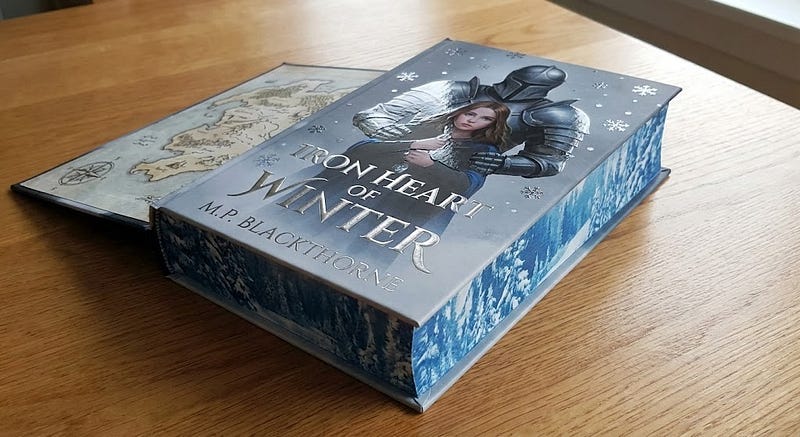
If you’ve spent any time on “BookTok” or “Bookstagram” lately, you’ve noticed a shift. Readers aren’t just buying stories anymore; they are collecting artifacts. They want “Trophy Books” – stunning, tactile hardcovers with gold foil, ribbon bookmarks, and sprayed edges that look just as good on a shelf as they feel in the hand.
For years, the indie author’s only option was Amazon KDP. And while KDP is a miracle for distribution, its manufacturing is utilitarian. KDP hardcovers are “Case Laminate” – essentially a paperback cover glued onto a hard board. There is no texture, no foil, no cloth, and definitely no ribbon.
But in 2025, the game has changed. You no longer need a Big Five publisher or a warehouse in your garage to produce collector-grade editions. You just need to know which supply chains to tap into.
Here is the definitive guide to creating luxury books as an indie author, ranging from zero-risk Print-on-Demand to strategic small-batch manufacturing.
Level 1: The “Zero-Risk” Bespoke Model (Print-on-Demand)
The biggest barrier to luxury books used to be inventory. You had to order 1,000 copies to get foil stamping. That is no longer true. A new wave of printers has introduced digital finishing that allows for “Bespoke” features on a single book.
The Heavy Hitter: BookVault
If you only look at one alternative to KDP, make it BookVault. Based in the UK but printing globally (including in the US), they are currently the only major player offering a true “Special Edition” suite for single orders.
Foil Stamping: Unlike traditional hot foil which requires an expensive metal die, BookVault uses “digital foil.” You can add gold, silver, or holographic foil to your cover or dust jacket for roughly $3–$4 extra per book.
Sprayed Edges: This is the holy grail of BookTok. You can get solid color sprays or even custom digital images printed on the page edges.
The “Feel”: They offer specific cover materials like Wibalin (a paper embossed to feel like cloth/linen) and Acrolin (a textured paper that simulates leather).
Ribbons & Headbands: Yes, you can add a satin ribbon marker and the decorative fabric strips at the top/bottom of the spine.
The Strategy:
Connect BookVault to a Shopify or WooCommerce store on your website. When a reader orders your “Deluxe Anniversary Edition” for $50, the order goes automatically to BookVault. They print it, apply the foil and ribbon, and ship it directly to the customer. You never touch a box.
The Runner Up: Lulu Direct
Lulu is a veteran in the space, but they have specific limitations for luxury.
Linen Wrap: They offer a “Linen Wrap” hardcover with a dust jacket. It feels nice, but the foil stamping is restricted to text on the spine only. You cannot have a giant gold dragon on the front cover.
No Sprayed Edges: As of now, Lulu does not offer on-demand sprayed edges.
Level 2: The “Drop” Model (Short-Run Batches)
If you have a loyal fanbase and can confidently sell 50–100 copies during a launch week (or a Kickstarter campaign), you can leave the world of POD and use “Short-Run” printers. This unlocks features that POD machines just can’t handle.
48 Hour Books (The Speed King)
If you want to run a quick “flash sale” for signed copies, 48 Hour Books is a secret weapon.
Diamond 3D Foil: They offer a raised, textured foil (Gold, Silver, Red, Blue) that feels like it’s embossed.
Minimums: You can order as few as 10 copies.
Speed: As the name implies, they are incredibly fast. This is perfect if you want to order 50 books to your house, sign them, and ship them out yourself.
Mixam (The Customizer)
Mixam is a favorite among graphic novelists and art book creators because of their flexibility.
Spot UV & Foil: They allow for complex spot UV (shiny clear gloss over matte) and foil combinations.
Dust Jackets Only: Pro Tip: If you are happy with your KDP hardcovers but hate the lack of a jacket, you can print just the dust jackets through Mixam (often with foil/velvet touch) and wrap them around your KDP books yourself.
Level 3: The “Artisan” Hack (Slipcases & Rebinding)
Want to charge $100+ per book? You need to offer something truly scarce.
Slipcases on Demand: BookVault has recently introduced custom printed slipcases and box sets on demand. You can sell a trilogy in a branded box without ordering 500 empty boxes from China.
The Re-bind: For the ultimate luxury, some authors work with custom bookbinders. You send them a “text block” (the inner pages of your book, which you can order from KDP or IngramSpark), and they hand-craft a leather or cloth case. This is expensive and slow, but allows you to sell “Artist Proofs” for hundreds of dollars.
The “Boring” Technical Stuff (Do Not Skip This!)
Creating these books requires you to wear a “Production Manager” hat. Here are the three traps to avoid:
1. The ISBN Trap
You cannot use your KDP ISBN for your BookVault luxury edition. An ISBN identifies a specific product format. A “Case Laminate Hardcover” is a different product than a “Cloth Bound Hardcover with Dust Jacket.” Buy a new ISBN for your special edition.
2. The “Mask” File
Printers cannot “see” gold. If you want gold foil, you cannot just use a yellow gradient in your cover art. You must create a separate PDF file called a “Mask.”
Everywhere you want foil must be 100% Black (K) on this file.
Everything else must be white.
The printer uses this black shape to tell the machine where to stick the foil.
Note: Use vector graphics (Adobe Illustrator/Affinity Designer) for this. Pixelated foil looks terrible.
3. The Price Point
Do not underprice these. A KDP hardcover might cost you $10 to print. A fully loaded BookVault edition with foil, sprayed edges, and a ribbon might cost $20–$25 to print.
Standard KDP Hardcover Retail: $24.99
Special Edition Retail: $45.00 – $65.00
Your superfans are not price-sensitive; they are value-sensitive. They are paying for the object, not just the story.
Summary Checklist for the Indie Author
Design: Commission a vector-based cover design that includes a separate “Foil Mask” layer.
Platform: Set up a Shopify or WooCommerce store (you can’t sell these features on Amazon directly).
Printer: Create an account with BookVault (for POD) or get a quote from 48 Hour Books (for batch inventory).
Sample: Order one single proof copy before you announce anything. Digital foil can sometimes align differently than printed ink; you need to see it in person.
Launch: Market this as a “Direct Exclusive.” Tell your readers: “The paperback is on Amazon, but the Collector’s Edition is only on my website.”
The technology has finally caught up to our ambitions. Go make something beautiful.
I’ll add 48 hour books to the list of print shops that can do it all for special editions. The company is awesome and the books even more so
Great to know! I had no idea indie authors had access. 🏆🏆😎😎