


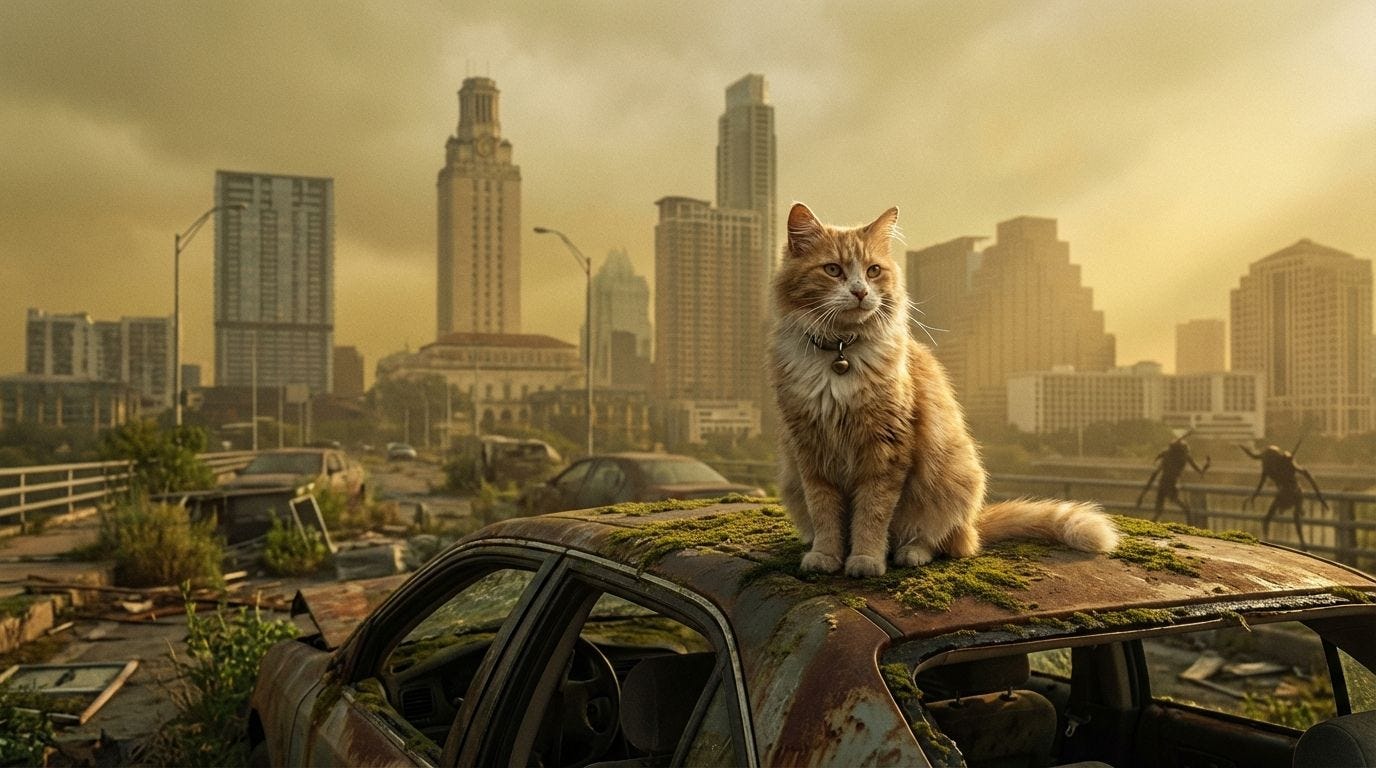
Everyone thinks they know their cat. Then you try to write a book from their perspective and realize you’ve been living with a complete alien for ten years.
When I started my zombie apocalypse novel, I made the classic mistake. I wrote a human who happened to be four inches off the ground. He “saw” the ruins; he “thought” about the tragedy. It was boring. It was fake.
To fix it, I had to stop looking and start tasting the air.
The Scent of History
Humans live in a flat, visual “now.” Cats live in a layered history of smells. In the research for this book, I learned about the Vomeronasal Organ – essentially a second nose in the roof of the mouth. When a cat does that weird, open-mouthed sneer (the Flehmen response), they aren’t just being funny. They’re analyzing the “chemical resume” of the environment.
In a ruined city, my protagonist doesn’t just see an empty hallway. He tastes the fading heat-signature of a survivor who passed through an hour ago. He smells the “chemical wall” of a nearby corpse – the sharp, repulsive spike of cadaverine and putrescine. To a cat, the apocalypse isn’t a sight. It’s a stinking, molecular map.
The High Road
We navigate by floor plans. Cats navigate by verticality. In a world full of “Shamblers” (my cat’s name for zombies), the floor is a death zone. I had to train myself to stop describing rooms from the doorway.
My protagonist sees the world as a series of rafters, mantles, and “Hard Air” (glass windows). The “High Road” is the only road that matters. If there isn’t an escape route three feet above his head, he isn’t interested in the room. This shift changed the entire pacing of the action. It isn’t a chase; it’s a 3D puzzle.
The Human-Cat “Pidgin”
The most heartbreaking part was the “Secure Base” theory. Research shows cats actually view us as a secure base for exploration. They don’t see us as masters – they see us as large, clumsy, loud colony members.
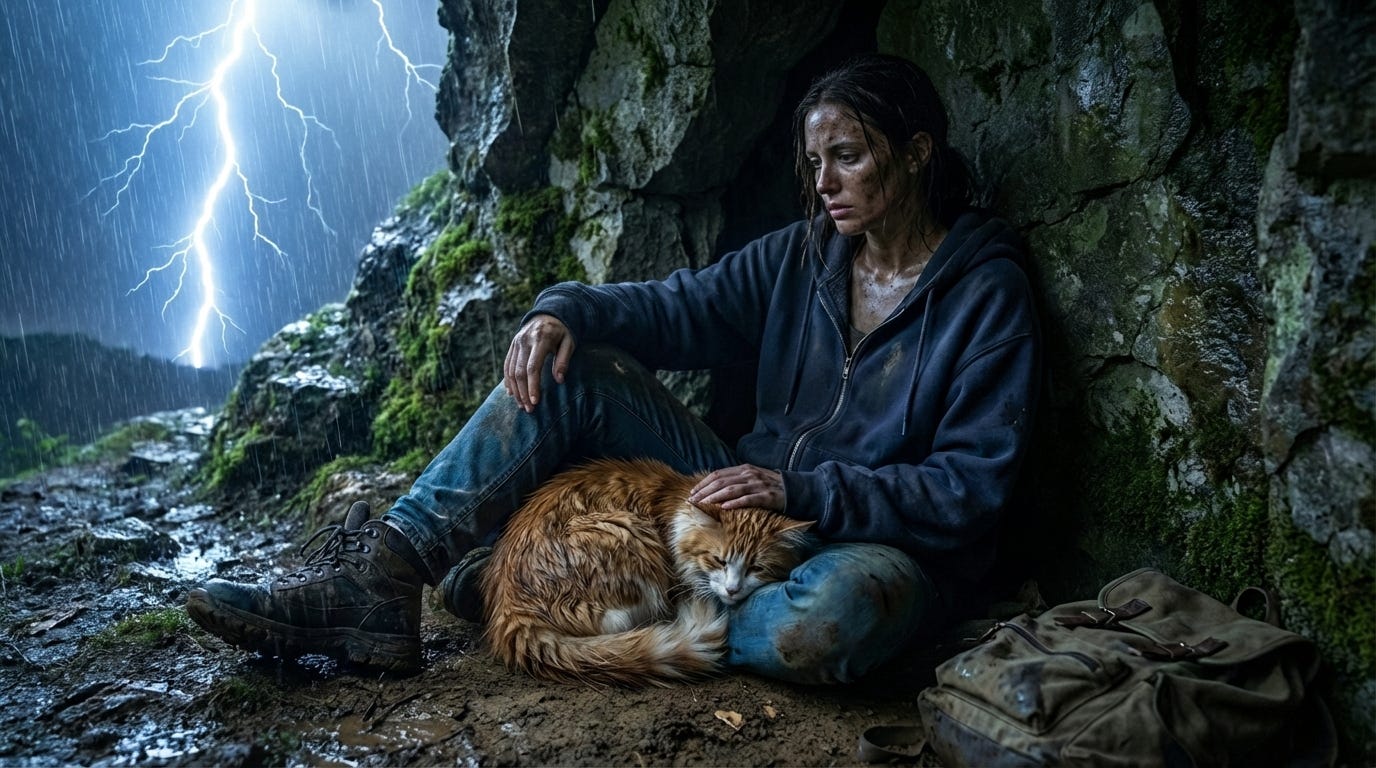
My cat-protagonist doesn’t understand the semantics of his human’s frantic warnings. He hears the “fear-tremor” in the voice. He decodes the “sharp-spike” of aggression. They speak a pidgin language of slow-blinks and shared scent-marks. When the human dies or disappears, the cat’s world doesn’t just get lonelier – his confidence literally collapses. He loses his “secure base” and reverts to a silent, terrified ghost in the walls.
Getting it Right
Writing this required a “Translated Interior Monologue.” No “weaving tapestries” of emotion. No “pivotal” moments of realization. Just the raw, physical reality of survival.
Is the air moving? Does the ground vibrate with the “Sky Growl” of distant thunder? Does the prey taste of “Life-Energy” or the bitter rot of disease?
Once I stripped away the human ego, the story finally started to breathe. It’s grittier, quieter, and much more dangerous. Turns out, the end of the world looks a lot better from the rafters.
Really dig this idea. Fun concept. I imagine the internal monologue in such a setting could be a fascinating narrator.
Cats are fascinating. What books on cats did you read? Also, have you read Tailchaser's Song by Tad Williams?