


I still remember the first time I saw a Viper launch in the 2004 reimagining of Battlestar Galactica. It wasn’t the SFX or a gleaming CGI flyby that got me. It was the camera. It struggled to find focus. It jerked like a cameraman was actually standing on a nearby hull, fighting the glare of a distant sun.
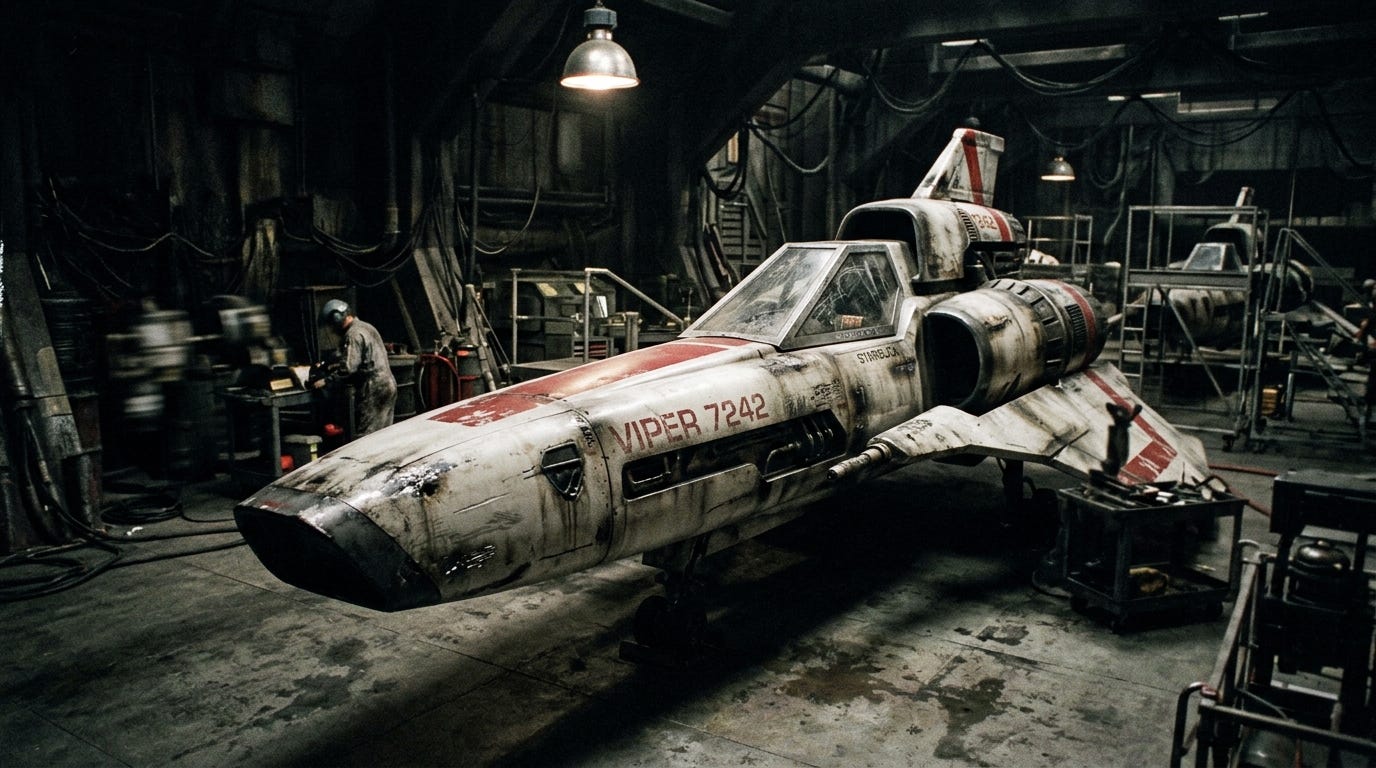
That single choice changed how I look at science fiction. It wasn’t just “way cool” pictures. It felt like a documentary filmed in a graveyard.
If you write sci-fi, or any fiction really, BSG is the ultimate masterclass in what Ronald D. Moore called “Naturalistic Science Fiction.” Here is how it ruined traditional space opera for me – and how we can steal its soul for our own work.
Kill the “Magic Box”
Most sci-fi is obsessed with the hardware. We want to know how the warp drive works. Moore didn’t care. He banned “technobabble.” If the ship was low on fuel, they didn’t “reconfigure the phase injectors.” They went out and found a rock with tylium in it. They got dirty. They bled.

In my own writing, I’ve tried to adopt this “Scarcity Principle.” When your characters have a replicator that makes tea, Earl Grey, hot, you’ve killed the drama. But when they are down to their last three bullets and the air smells like recycled sweat and stale ozone? That’s where the story starts.
The Lesson: Give your world constraints. Make the technology feel heavy, analog, and prone to breaking.
Characters as “Hot Messes”
Starbuck (Kara Thrace) was a revelation. Before Katee Sackhoff took that role, the “ace pilot” was usually a square-jawed hero. Thrace was a disaster. She drank too much, she punched her superior officers, and she hated herself.
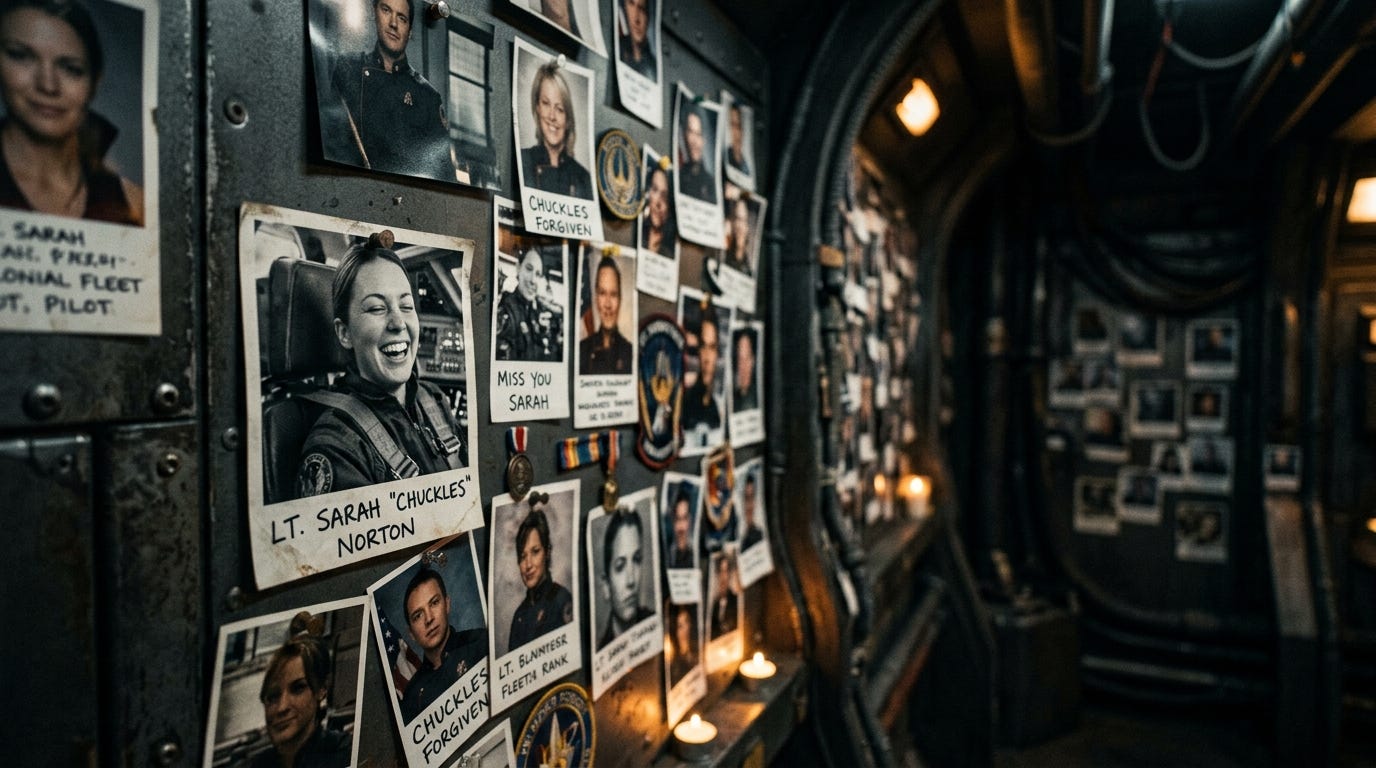
BSG proved that you don’t need “heroes.” You need people who are barely holding it together. Look at Gaius Baltar – a moral train wreck who accidentally sold out his species because he wanted to impress a beautiful woman. We’ve all been some version of that idiot, hopefully with lower stakes.
When I draft characters now, I look for the “scar.” If a character is angry, I don’t write “he felt a surge of rage.” I have him smile while he grips a glass until his knuckles turn white. Subtext over description.
The “33” Effect: Relentless Pressure
The first episode, “33,” is still the gold standard. The Cylons show up every 33 minutes. No sleep. No breaks. Just 130 hours of pure, hallucinatory exhaustion.
The show didn’t explain how the Cylons tracked them. It didn’t matter. What mattered was the biological toll. The characters looked like hell – bruised eyes, shaky hands, frayed tempers.
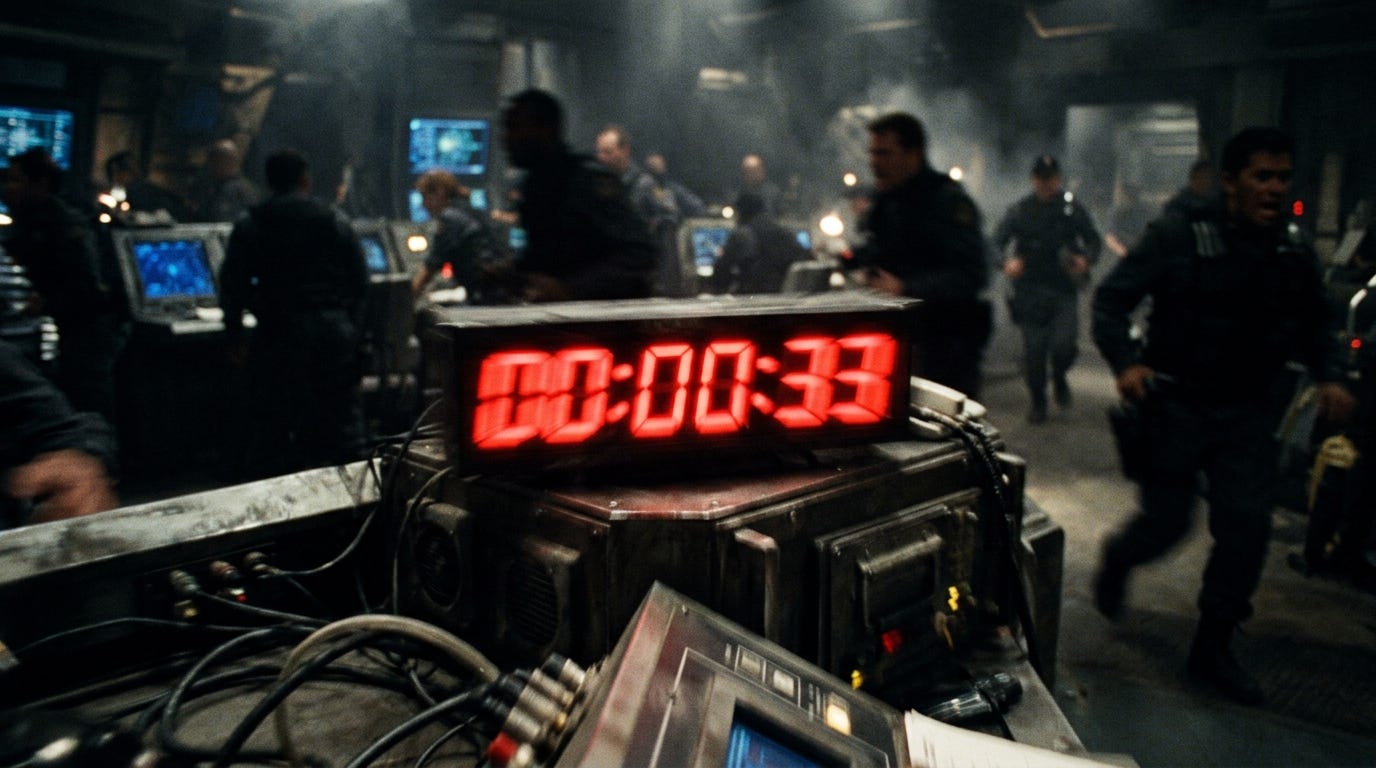
If your plot feels slow, stop worrying about the “why” and start ratcheting up the “now.” Put your characters in a room and take away their sleep. See who they really are when the filters fall away.
All This Has Happened Before
The show’s mantra – All this has happened before, and all this will happen again – is a haunting reminder that we are all trapped in cycles. It used the post-9/11 anxiety of the early 2000s to ask impossible questions about torture, civil liberties, and what happens when the “enemy” looks just like us.
It didn’t offer easy answers. It just held up a cracked mirror.
How to Replicate It
You don’t need a hundred-million-dollar VFX budget. You need:
Vulnerability: Make your “invincible” tech breakable.
Moral Grey: Let your protagonists do things that make the audience scream at the screen.
The Primitive: Use music and atmosphere that feels ancient. Think Bear McCreary’s Taiko drums – visceral, tribal, and urgent.
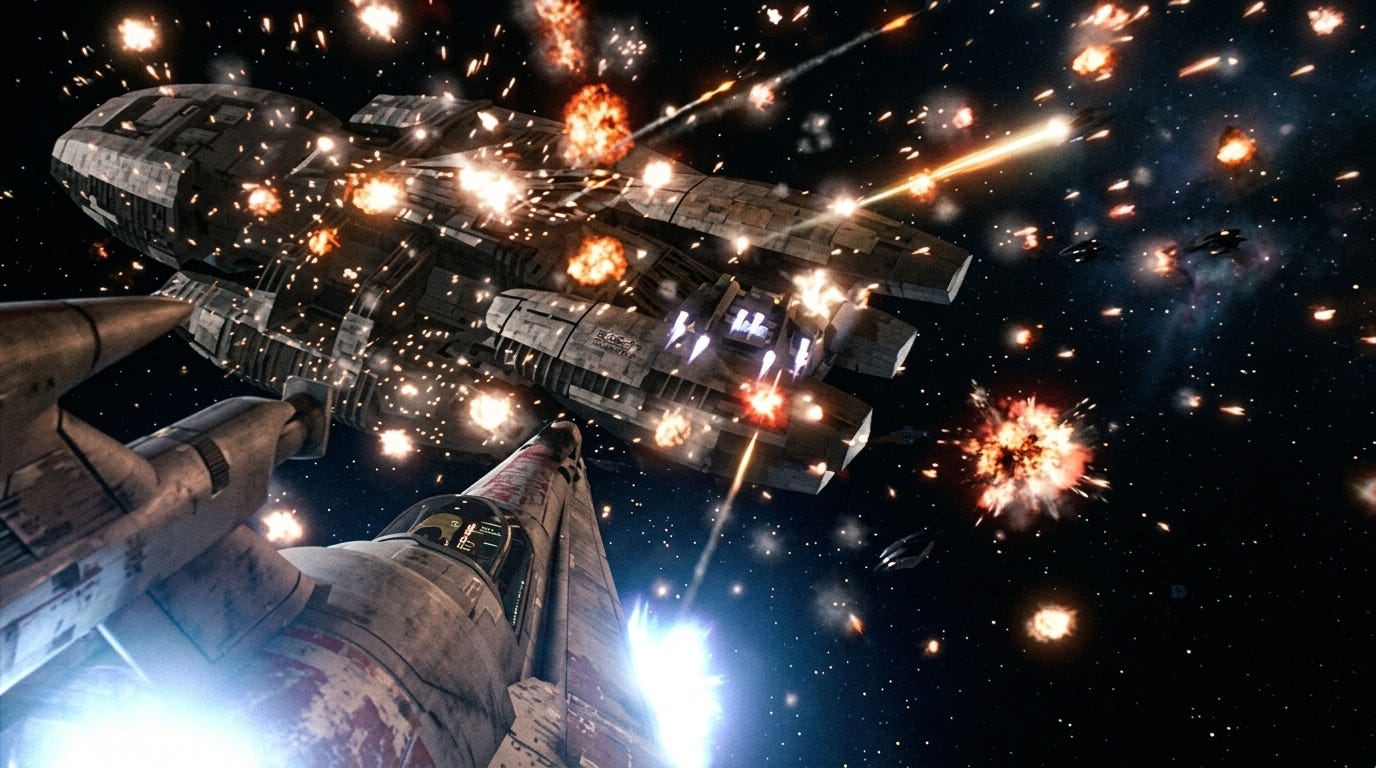
BSG wasn’t about the stars. It was about the people trapped in the tin cans between them. It taught me that in the vast, cold vacuum of space, the only thing that matters is the person standing next to you.
So say we all.
Currently rewatching. Just coming up on the end of season 2. It's amazing how well it holds up so many years later.
One of my favorite space operas and one of the best shows on TV ever!
I love how you take what they did with the story to show how writers can improve on their own writing!
I love how you redescribed feeling “rage” that way is so much more palpable and gives the reader such a vivid picture in the minds eye.